Your business runs on spreadsheets. It's quietly costing you more than software would.
One system, built around how you actually work, by someone who spent ten years running clinics and farms before building software for them. Fixed price, live in weeks, and the code is yours.
~2 minutes. A written read back within one business day — or book a 25-min call instead.
Already shipping production systems for —
- Aruj NurseryAgritech ERP
- CNC Trust Medical InstituteHealthtech platform
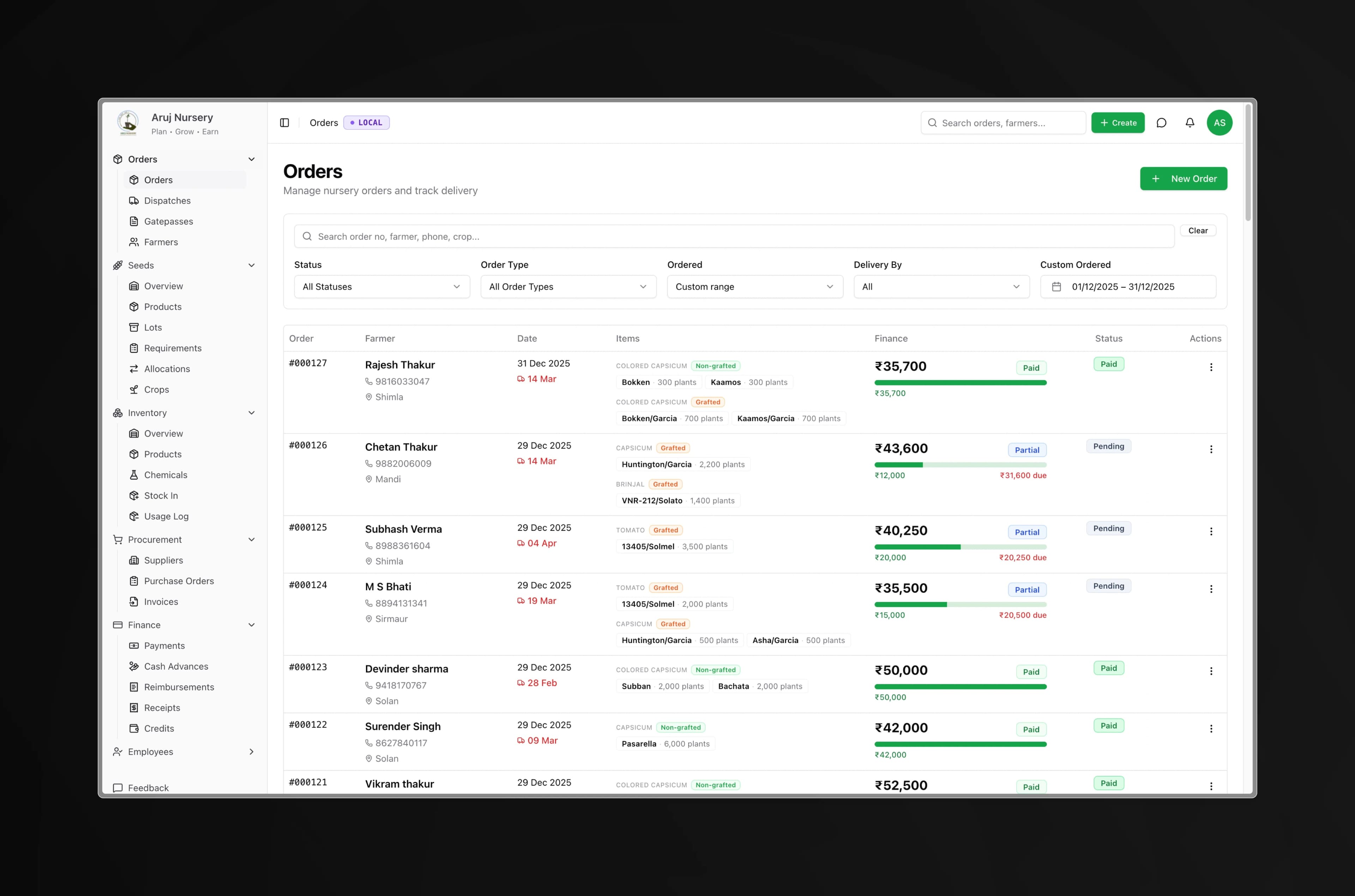
Operations platforms businesses run on every day.
Real software, shipped and running. Not concept work, not a marketing-page-only portfolio.
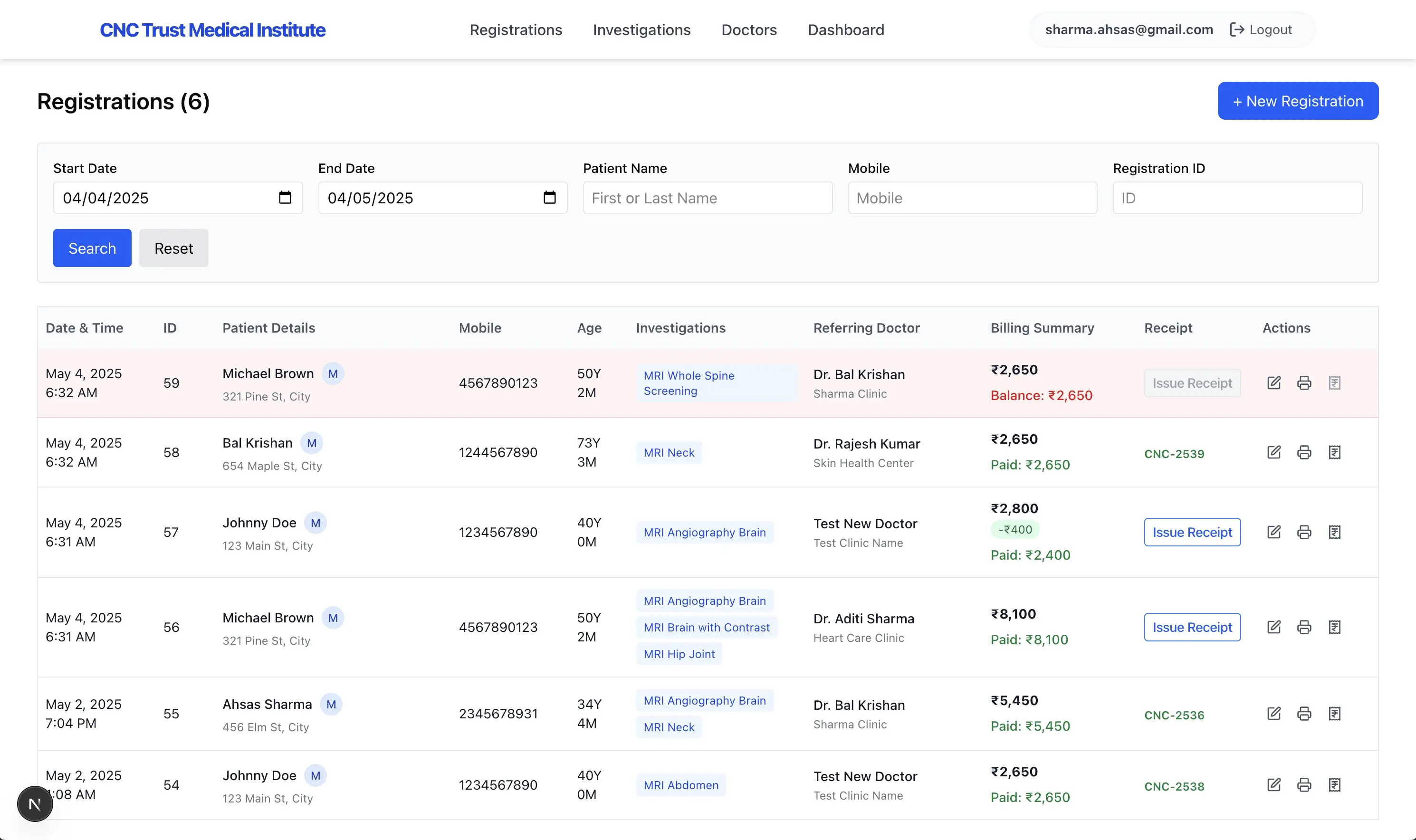
▲ Want a reference call with any of these clients? Ask in your brief.
Which of these is you?
Pick the closest fit and see exactly how this works for a business like yours — in your own words, not ours.
Not on the list? The same approach fits most operations-heavy businesses. Tell me about yours →
Three commitments that make 'actually ships' real.
Velcore is a one-person studio for businesses that have outgrown spreadsheets, no-code and half-built internal tools. I spent a decade running clinics and farms on those spreadsheets before I started replacing them. These are the three rules I work by — written into every SoW.
One paid week to turn a vague problem into a real spec — architecture, data model, scope, and a fixed-price quote for the build. Even if you don't continue, you keep everything and can hand it to any engineer.
- Written architecture + data model
- Build plan with milestones
- Fixed-price quote for the work
No 6-month dark rooms. Every two weeks something is in production you can actually use. Weekly written progress updates. Stop after any sprint, no penalty, no escape clause to negotiate.
- Live deploys every 2 weeks
- Weekly written progress updates
- Stop or pause at any sprint boundary
Code in your repo, infrastructure on your accounts, DNS in your registrar. Full handoff at the end with documentation and a runbook. Any other engineer can pick this up — I am not a single point of failure for your business.
- Repo, infra, accounts — all yours
- Documentation + runbook on handoff
- Optional retainer, never required
Four steps. Two-week ship cycles. No surprises.
Built so you can stop at any point with something real in production — not a half-finished prototype and a bill.
- 01
Brief → written assessment
~2 min to writeYou describe the problem; I tell you honestly whether I'm the right person to build it. Sometimes the answer is no, or not yet — you'll get that in writing too, along with what I'd do in your position.
- 02
Discovery sprint
1 week, fixed-feeWe turn the problem into a real spec — architecture, scope, milestones, a working prototype if useful. Fixed price. If we don't move forward, you keep the spec.
- 03
Build in 2-week ship cycles
Per sprintEvery two weeks, something is in production you can use. No 6-month dark rooms. You see weekly progress, ship-ready demos, and you can stop after any sprint.
- 04
Hand-off
PermanentYou own the code from day one. I leave you with documentation, a runbook, and an offer to keep helping — not a dependency you can't escape.
Sample sprint output — what shipping looks like at the end of a build cycle
The five objections you're already thinking — handled.
Hiring someone to build your system is expensive and easy to get wrong. These are the table-stakes guarantees most studios won't put in writing.
“Will you actually understand how my business runs?”
Probably better than most developers.
Most developers learn your business from a requirements document. I learned it by running the operations myself:
- Clinics
- Ran radiology clinics end to end in Malaysia and India: staff and HR, billing, vendors, daily cash collection and reconciliation across accounts.
- Farm
- Managed a polyhouse operation: fertigation, inventory, chemicals, labour and sales, on tools I built myself.
Now I build those systems for other businesses: a clinic platform handling real patients and money, and the ERP behind a grafted-vegetable nursery — orders, purchase orders, seed requirements, grafting rules and staff.
“What if you over-promise and miss?”
First sprint, fixed-fee.
Cap your downside on day one. The discovery sprint is $1.5k, fixed. If we don't move forward after, you walk away with the spec — not a runaway invoice.
“What happens when you go on vacation?”
You own the code, on day one.
Repo, infrastructure, accounts — all under your name. Any other engineer can pick it up. I am not a single point of failure for your business.
“How do I know you'll actually reply?”
4-hour weekday reply SLA.
Inquiries, project messages, support — answered within the business day, every time. Written into every SoW with a clear escalation path.
“What if it's the wrong fit?”
Stop after any sprint. No penalty.
No long contracts to escape. Pause, reduce scope, or end the engagement at any sprint boundary. The work that shipped is yours regardless.
Anchored, not hidden.
Most engagements fall into one of three shapes. Final pricing is scoped from your brief — but here's what to expect.
Turn a vague problem into a real spec. Architecture, scope, milestones, and a working prototype if useful. If we don't move forward, you keep the spec.
- 1-week engagement
- Architecture + scope doc
- Working prototype (when useful)
- Risk-free — fixed price
Full builds for new platforms, internal tools, customer-facing products, and AI integrations. Most projects ship to production in 2–6 weeks.
- 2-week ship cycles
- Production-ready from sprint 1
- You own the code
- Stop after any sprint
Ongoing engineering capacity. New features, performance work, AI integrations, infra hardening. Your roadmap, my hands.
- Async + scheduled syncs
- Predictable monthly fee
- Cancel anytime
- First month prorated
▲ All engagements include code ownership, documentation, and a 4-hour weekday reply SLA.
Common questions, honest answers.
Still unclear? Email hello@velcore.dev and I'll answer in writing.
Solo, by design. The person you talk to is the person writing your code. For projects requiring specialized work outside my domain (heavy DevOps, advanced ML, dedicated design), I bring in a small bench of specialists I've worked with — and I'm transparent about who's doing what.

Hi, I'm Ahsas.
Before I wrote software, I ran the businesses it's for. I managed radiology clinics in Malaysia and India — the front desk, billing, staff and daily cash. I helped deploy PACS and teleradiology in hospitals in Singapore, and I ran a polyhouse farm where our fertigation schedules, inventory and field surveys lived in tools I built myself.
I learned the expensive way where spreadsheets break: the receipt nobody can find, the dues nobody can total, the report that's stale by Wednesday. So I started building the systems I wished I'd had — first small tools on top of a clinic's existing RIS, then complete platforms.
I work alone, on purpose. The person who scopes your project is the person who builds it, and the person who answers when something breaks. I use AI coding agents to move fast, and I own every architecture decision, review and test.
Today that's CNC Trust Medical's clinic platform and Aruj Nursery's ERP — both running every day, built so the numbers reconcile and the staff actually use them. If your business has outgrown its spreadsheets, let's talk.
Tell me what you're dealing with.
Two minutes. You'll get a written read back within one business day — what I think you're describing, what it'd take, and whether I'm the right person to build it. Not a quote, an honest read.
Rather talk first? Book a 25-min call instead.