For small manufacturers and job shops
You quoted that job from memory. That's where the margin went.
One system for quotes, job costing, production status and materials — so you know the real cost before you commit to a price. Live in weeks, fixed price from $6,000, and the code is yours.
No pitch deck. We'll look at how you actually quote and cost a job and tell you if custom software is even the right answer.
If any of this sounds like your week, keep reading.
Quotes come from experience, not from numbers.
Two similar jobs, wildly different margins — and no way to know which is which until it's over.
“Where is that order?” takes 20 minutes to answer.
The status is spread across a whiteboard, a WhatsApp group and one person's memory.
Material costs move. Your price list doesn't.
You discover the squeeze at the end of the quarter.
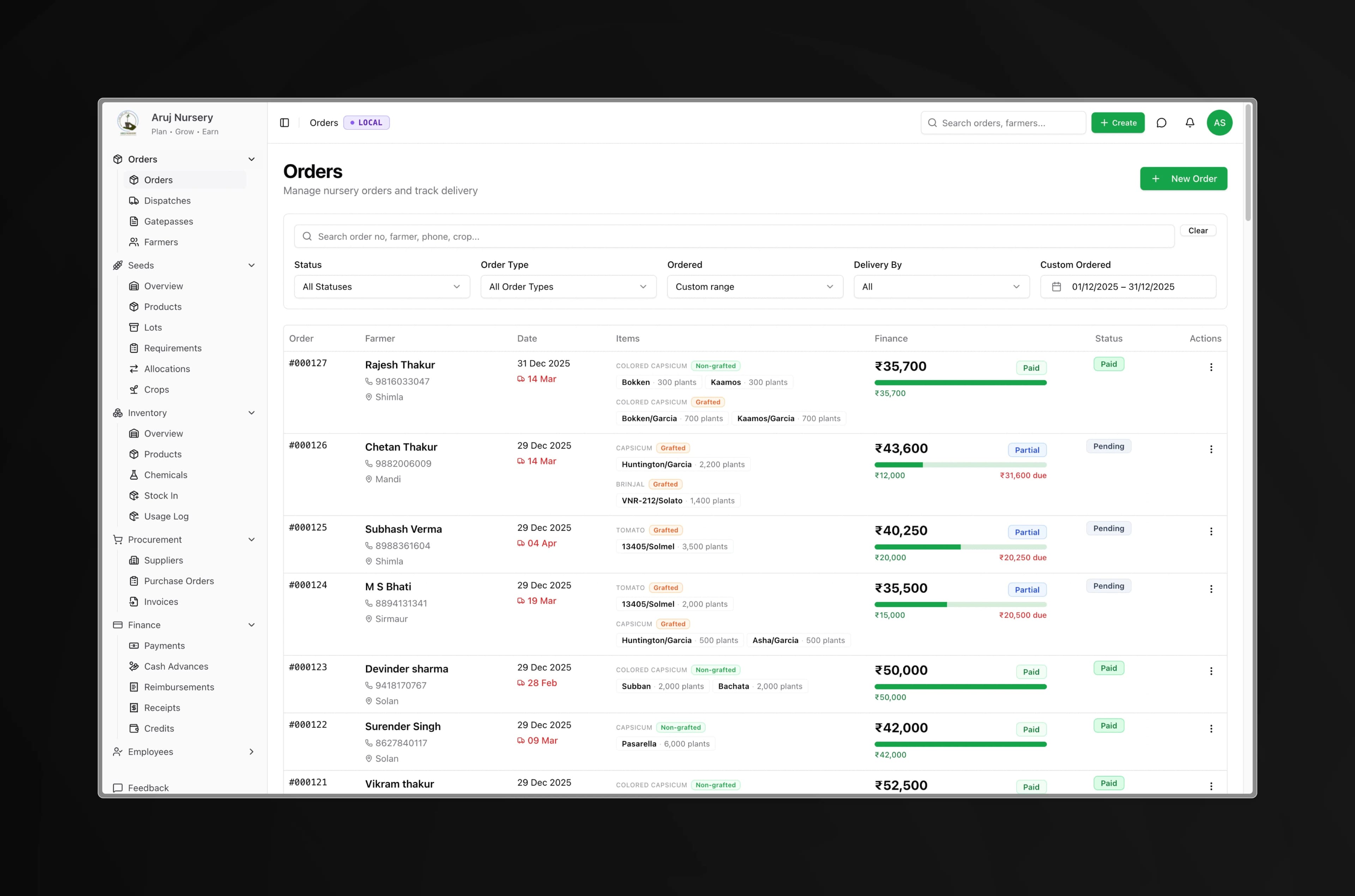
Don’t take my word for it. Look at the two screens.
Real screenshot goes here — names, prices and numbers blurred.
Same business. Same process. Different Tuesday.
Aruj Nursery
Wholesale horticulture · ops & costing
Before — As they scaled, quoting and costing lived in memory and scattered sheets. Procurement, received seed-lots, and supplier invoices sat in different places, so the true cost of fulfilling an order only became clear after it shipped — the same blind spot a job shop hits when it quotes from experience.
After — One system now ties orders to procurement, materials, and costing, so the real cost is visible before a price is committed — not after. The same modules that cost a nursery's orders cost a shop's jobs. Built and shipped solo, in production use today.
Business workflows unified
Roles with their own view
Margin caught before quote (owner estimate)
Client quote pending — a reference call with Aruj Nursery is available on request. Mention it on the fit call.
Read the full case study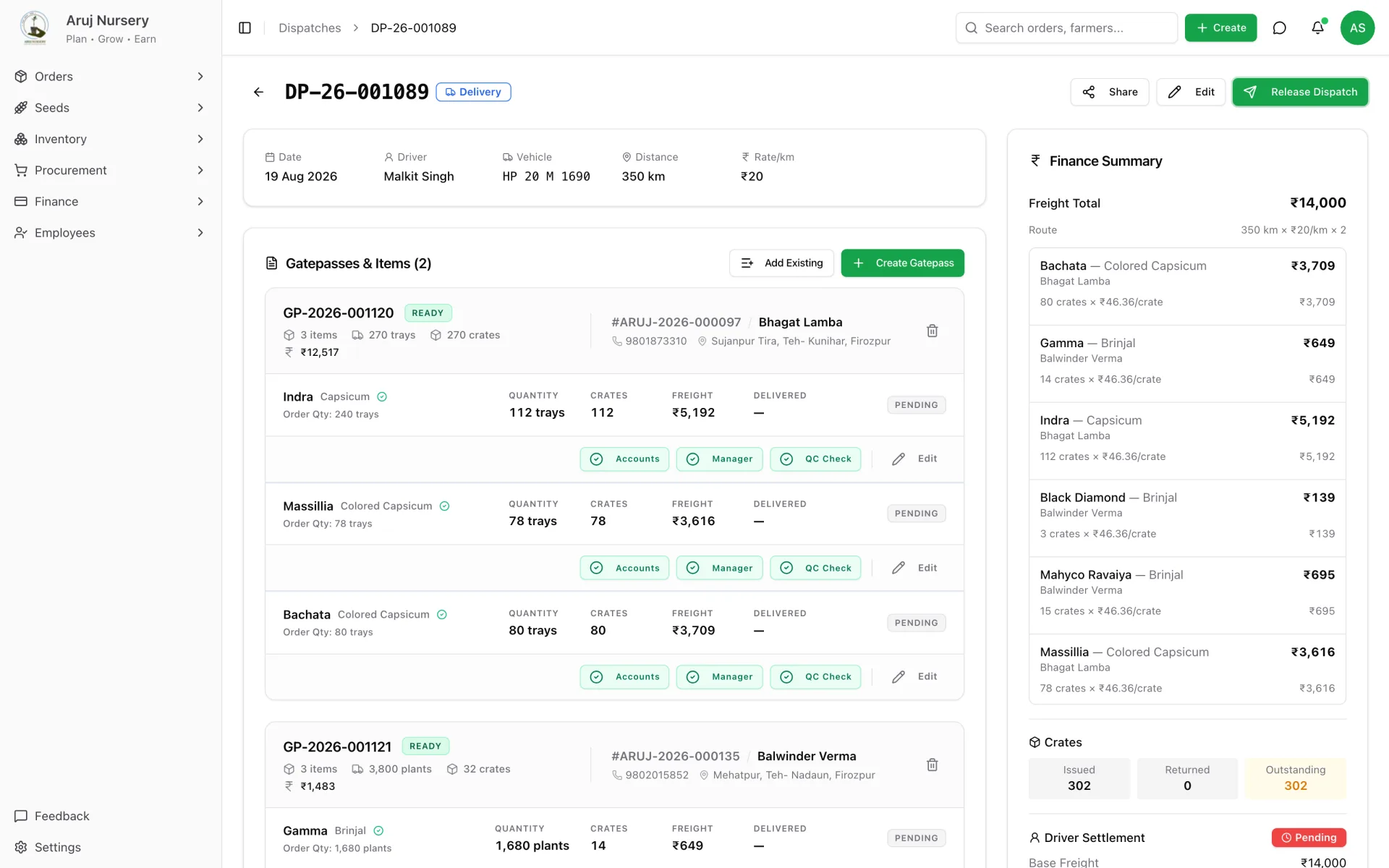

I ran the operations before I wrote the software.
I spent years as a director of a diagnostics business and running farm operations — ordering, stock, staff, receivables, the whole daily mess. I lived inside the spreadsheets I'm now describing to you, and I know exactly which ones lie.
Then I taught myself to build. Not as a hobbyist — I've shipped production systems that businesses run on every day: an ERP for a nursery, a radiology information system for a diagnostics network.
That's the difference. Most developers learn your business from a requirements document. I've been the person drowning in your process, which means I know which questions to ask and which “small details” are actually the whole job.
- ERP in production
- Radiology information system in production
- Solo delivery, direct contact, no account managers
Four steps. The first one is a free conversation.
Fit call
You describe how the work happens today. I tell you honestly whether custom software is worth it for you — sometimes the answer is no.
Discovery sprint
I map your process, write the spec, and price the build. You keep the spec whether or not you continue — including if you take it to another developer.
Build
You see working software every two weeks, not at the end. Changes happen while it's cheap to change.
Handover and support
Your repo, your accounts, documentation, and a training session for your team. Support retainer optional, never required.
You can stop at any point with something real — and your money isn’t on an hourly meter.
Fixed price, agreed before work starts.
No hourly meter, no surprise invoice.
You own the code and the accounts.
Everything is in your name from day one. Leaving is always possible.
Stop after any sprint.
No annual contract, no lock-in, no cancellation fee.
Working software every two weeks.
You'll know it's going wrong long before it costs you.
The real ask on this page. I map your process, write the spec, and price the build. You keep the spec even if you walk — including if you take it to another developer.
- Fixed price, agreed up front
- A written spec and a real build quote
- Yours to keep, no obligation to continue
- Ends with a specific timeline and price
typical first system · 2-week blocks
Priced exactly at the end of the sprint. Paid in 2-week blocks, stop after any one.
The questions you’re actually asking.
Often yes — and if that's the right answer for you, I'll say so on the fit call. Off-the-shelf wins when your process is standard. Custom wins when you're bending the tool to fit how you actually work, or paying per user for features you don't use.
Worth a 25-minute conversation?
No slides. You walk me through how jobs actually move through your shop today, and I'll tell you what's worth building — or that nothing is.
›For your IT person — the technical detail
Built with Next.js, TypeScript and PostgreSQL, deployed on infrastructure you own. Role-based access, audit trails, daily backups.